


What Size Generator Do You Need? A Simple Home Backup Guide

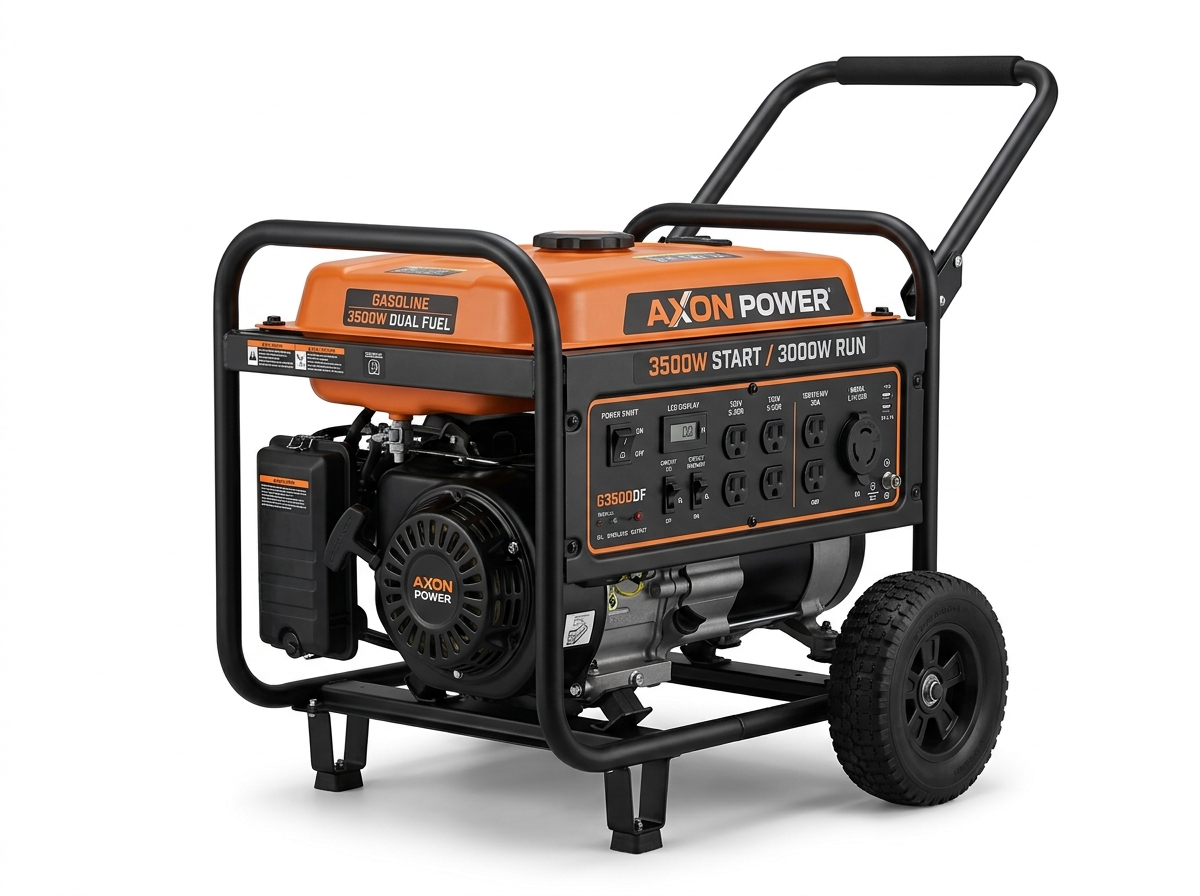
A power outage always seems to hit at the worst moment — during a storm, a heatwave, or right in the middle of dinner. A home generator keeps the essentials running, but only if it’s sized correctly. Here’s a simple way to figure out exactly how many watts you need.
Step 1: List What You Want to Power
Start with the essentials. Typical running wattages look like this:
- Refrigerator/freezer: 600–800W (plus ~1,200W surge at startup)
- Sump pump: 800–1,100W
- Window AC unit: 1,000–1,500W
- Lights (LED, whole home): 150–300W
- Wi-Fi router + modem: 20–30W
- Microwave: 1,000–1,200W
- Well pump: 1,000–2,000W
Step 2: Add Running Watts + the Biggest Surge
Add up the running watts of everything you’ll use at the same time, then add the single largest startup surge. Motors (fridges, pumps, AC compressors) briefly draw 2–3x their running wattage when they kick on. If your running total is 3,500W and your fridge surges an extra 1,200W, you need at least 4,700 watts.
Step 3: Add a 20% Safety Margin
Running a generator at 100% load nonstop shortens its life and leaves no room to plug in one more thing. Aim to run at around 80% of rated capacity. For our example, that means a generator rated around 5,500–6,500 running watts.
What Size Fits What Situation?
- 2,000–3,000W: Camping, tailgating, phones, lights, a small fridge.
- 4,000–6,500W: The sweet spot for home backup — fridge, sump pump, lights, TV, and a window AC. Models like the Champion 6250-watt units live here.
- 7,500–10,000W: Larger homes, well pumps, central AC (smaller units), workshops.
Features Worth Paying For
- Electric start: No pull cord battles in a storm.
- Dual fuel: Run on gasoline or propane — propane stores indefinitely.
- CO shutoff sensor: Automatically stops the engine if carbon monoxide builds up.
- Wheel kit: A 6,000W generator weighs 150+ lbs. You want wheels.
Safety First
Always run a generator outdoors, at least 20 feet from the house, exhaust pointed away from windows and doors. Never plug it directly into a wall outlet — use heavy-duty outdoor extension cords or have an electrician install a transfer switch.
The Bottom Line
For most homes, a 5,000–6,500 watt generator with electric start hits the perfect balance of power and price. Check out our lineup of Champion, Firman, and Sportsman generators — free shipping on orders over $300.


